
Arrest Warrants in Harrison County
An arrest warrant gives officers in Harrison County lawful authority to take a specific person into custody. It is not issued on a hunch. A judge or magistrate reviews a sworn complaint or affidavit under Texas procedure and must find probable cause before signing. The document names the person, describes the alleged offense, and may carry court-set instructions on execution or a bond amount. Records here are filed by case and court rather than one countywide public roster. So a Harrison County warrant search starts from a known case, a known court, or a law-enforcement contact. A third-party result can flag a possible record. Only the issuing court can confirm whether a warrant remains active, so treat outside listings as a lead, not an answer.
Harrison County Criminal Cases Start With the Filing Court
For adult felonies, the 71st District Court and the District Clerk hold the central court-record route. Misdemeanors of Class A and B run through the County Clerk and County Court at Law instead. A city police investigation can feed a county prosecution, but the city agency never replaces the clerk who keeps the court file. Find the court and cause number first whenever you can. That single step saves time. A filing, indictment, or setting traces the case path through Harrison County, yet none of them alone shows whether an arrest warrant is still outstanding. For that, ask the clerk or the issuing court directly about the cause number.
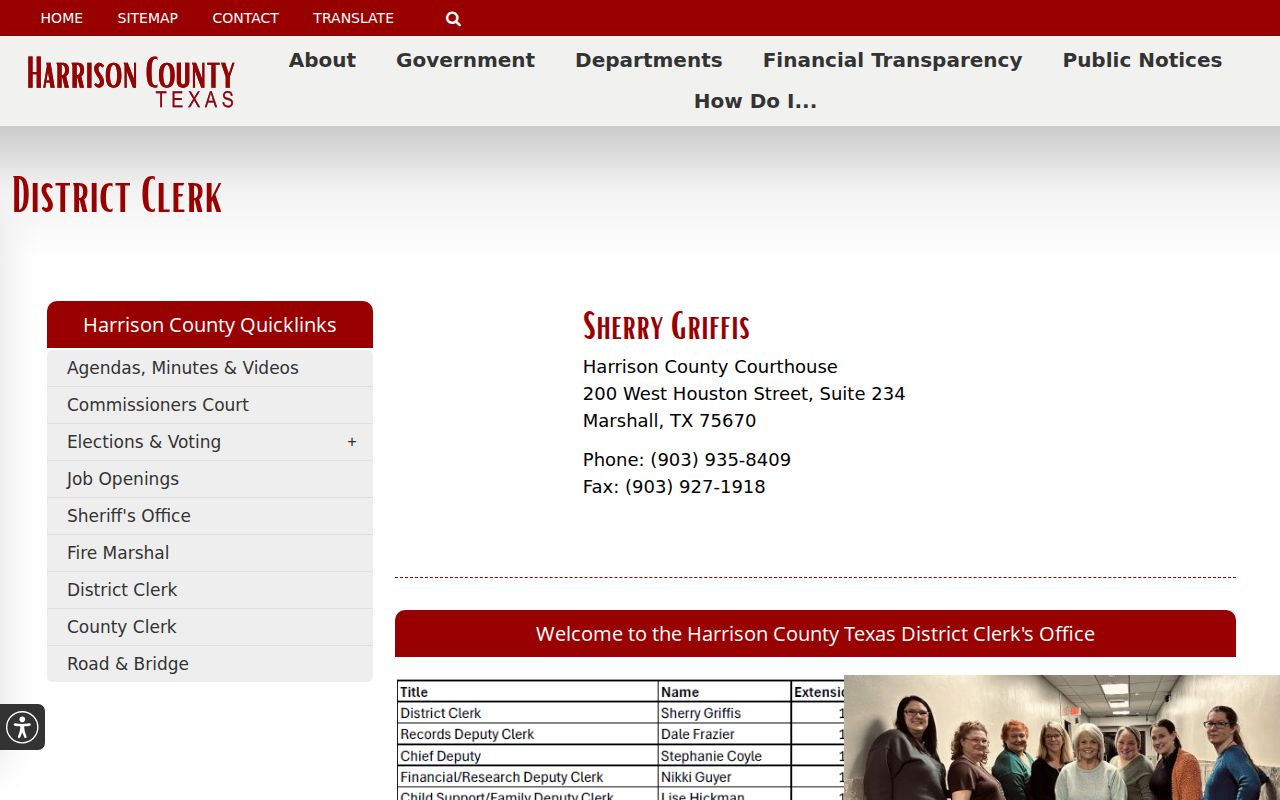
The District Clerk’s official page provides office details and the county’s record-request route.
The 71st District Court Lists Criminal Docket Stages
The 71st District Court's public information lays out criminal docket stages, which helps a reader see where an adult felony sits in the process. A docket stage is not a warrant status. The public docket can move through settings while a warrant order stays active in the background. Ask the District Clerk or the court about the specific cause number and whether a separate warrant remains in force.
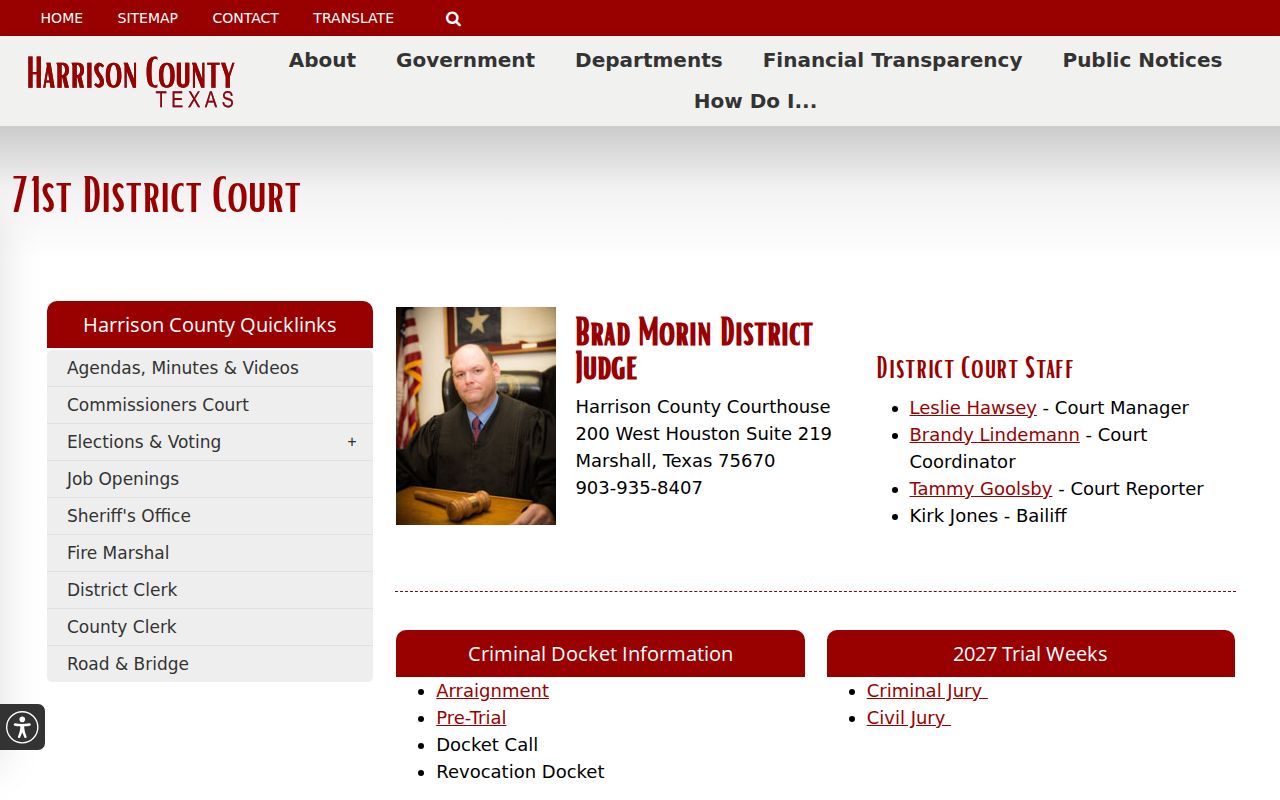
The 71st District Court page provides the court’s current docket information.
What a Harrison County Arrest Warrant Contains
Check every field against the case file, because names repeat in Harrison County and docket entries change. Match the cause number and court, not the name alone. Those two identifiers are far stronger. Keep in mind the public docket may list a case or a setting without showing every warrant document or the affidavit behind it, so the clerk's file may hold more than the online view.
| Warrant or Cause Number | Use the number shown by the issuing court to identify the case; no universal local warrant format was found. |
|---|---|
| Named Subject | Confirm spelling and other identifying details with the clerk or law enforcement. |
| Charge / Offense | Read the filed charge and check whether later entries amended it. |
| Issuing Judge / Court | Use the court shown on the order to route status questions. |
| Bond / Bail Set | Ask the court or counsel about current bond terms; an old amount may not reflect later action. |
| Date Issued | Compare issue date with later docket activity and confirm present status. |
Harrison County Warrant Papers Have Access Limits
Texas law generally opens an executed warrant and its supporting affidavit to the public after execution, though other laws can still restrict access. Before execution, the status and availability of a given document can look very different. Juvenile records follow separate confidentiality rules and should never be treated like an adult criminal file. Request the particular case record from the clerk or agency that holds it. A docket entry and the underlying affidavit are not interchangeable, and a Harrison County court may need to review whether a requested document can be released at all.
Texas Code of Criminal Procedure art. 15.26 addresses public access to executed warrants and affidavits, subject to other applicable law.
How Arrest Warrants Are Served
The Harrison County Sheriff's Office runs a Transport & Warrants unit, and city police handle matters inside their own jurisdiction. Which agency acts depends on the warrant and the assignment. An arrest can come during a planned contact or an unrelated lawful encounter. There is no public promise of advance notice before service. Custody and magistrate processes follow the arrest. The sheriff's Main Jail and Bonds & Fines lines are separate contacts, so use the official directory to route a custody, transport, or bond question to the right desk. One caution: a payment receipt or a booking entry by itself does not confirm the issuing court has recalled the warrant. Only that court can do it.
The Sheriff Confirms Enforcement Routing
The Sheriff's Office lists Transport & Warrants at 903-923-4002, Main Jail at 903-923-4003, Bonds & Fines at 903-923-4004, and non-emergency at 903-923-4000. Each line does a different job. A status question should name the court or case if known. A custody question belongs with the jail contact. The Harrison County directory promises no universal walk-in process, no instant lookup, and no set surrender arrangement. If you plan to address a warrant, counsel can contact the issuing court and coordinate with the relevant agency before any in-person appearance.
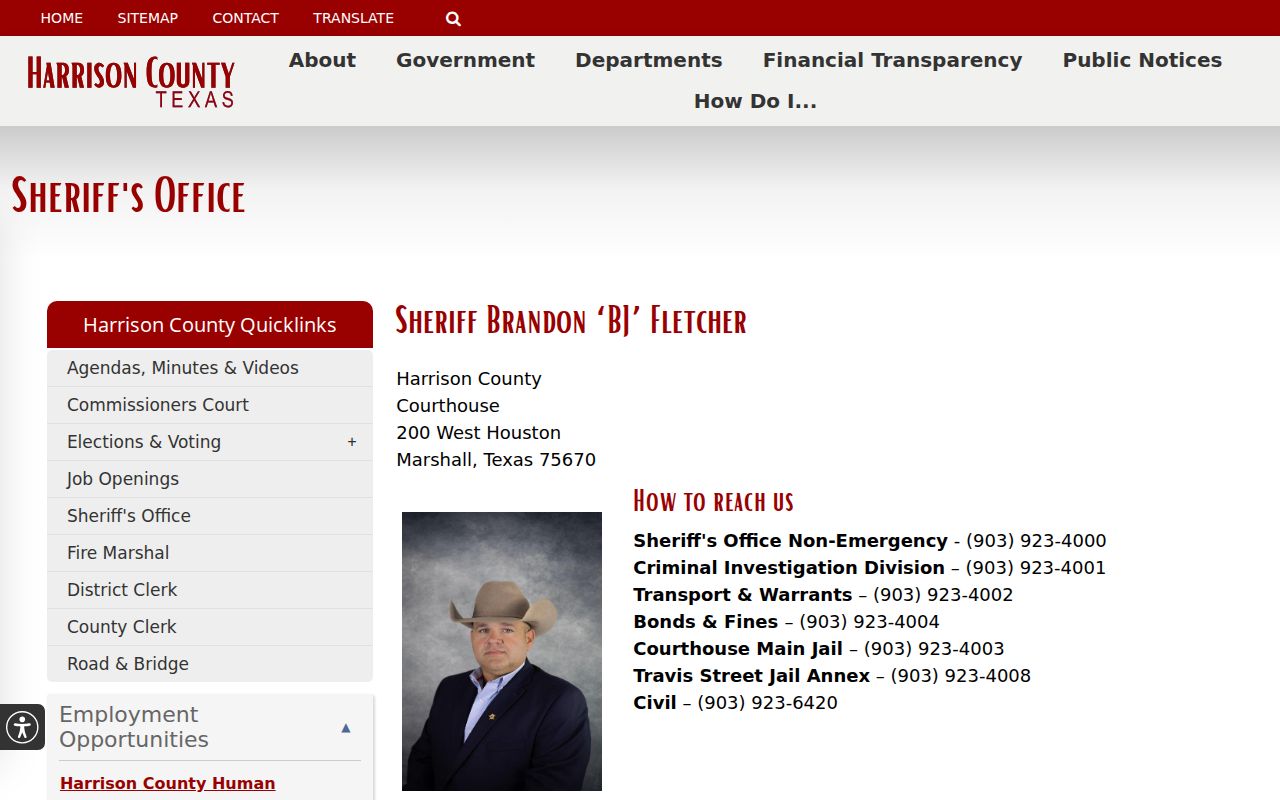
Use the official Sheriff’s Office directory to confirm current contact information.
Arrest Warrant vs Summons vs Bench Warrant
These papers carry different instructions. An arrest warrant authorizes custody on probable cause. A summons orders a person to appear without taking them into custody first. A bench warrant can follow a failure to appear or noncompliance with a court order. Harrison County court records may use varied labels, so read the signed order and ask the issuing court what it actually requires. For missed-setting routes, see the county bench-warrant page.
| Feature | Arrest Warrant | Summons | Bench Warrant |
|---|---|---|---|
| What It Orders | Officers may take the named person into custody | Appear before the court at a stated time | Custody or appearance after a court obligation was missed |
| Basis | Probable cause stated in supporting papers | Filed charge or court process allowing appearance | Failure to appear or comply with an order |
| Who Issues It | Judge or magistrate | Court or authorized issuing officer | Judge of the court with the case |
| How to Respond | Ask counsel about court contact, surrender, and bond | Follow the appearance instructions | Contact the issuing court about recall or appearance |
Harrison County Clerk Requests Need Case Details
Felony records sit with the District Clerk in Harrison County. Bring a cause number, a party name, and the year, and the request goes smoothly. Plan ahead for big jobs: multiple or oversized requests need at least ten business days' notice. Ordinary requests usually take two to three days, though the office does not guarantee that turnaround. Misdemeanor files run through the County Clerk instead, which handles county criminal cases and takes email requests at the address it publishes. When you write to either office, name the docket or the exact document you need, and say whether the request involves a warrant, an affidavit, or later court action. The clerks keep court records only. For enforcement or custody questions, call the Harrison County Sheriff's Office. The County Clerk's official page posts its current office and record-request details.
What to Do If There Is a Warrant for You
A warrant in Harrison County is never something to guess about. Have a lawyer check with the issuing court. That call confirms whether the warrant is still active. From there, counsel can walk you through voluntary surrender, posting bond, or a motion to recall or quash it. Do not rely on a statewide driver-record notice or an online docket alone, since a Harrison County arrest warrant may show up in one system and not the other.
Important: Speak with a Texas attorney about confirming the order and arranging a court appearance or surrender before going to an agency in person.